
· by Michael Blair, Nashville's Window Cleaning
A thump on the glass and a small bird on the patio is one of the questions we hear most from people with big, clean windows. The glass is doing what it is meant to do, which is to be hard to see. Birds read it as open sky or a way through.
Here is why they hit, why one bird keeps coming back, what actually stops it, and how the fix fits with keeping the windows clean.
Why do birds fly into windows?
Birds fly into windows because they cannot see glass. The Smithsonian Migratory Bird Center’s guide to safer windows explains that a reflection of sky or leafy trees looks like a safe flight path. Purdue Extension’s publication on residential window strikes adds a second reason: a bird can see straight through a window to plants inside or to another window on the far side of the room.
Houses are where most of the harm happens. The U.S. Fish and Wildlife Service says more than one billion birds hit glass in the U.S. each year and that most fatal collisions are at homes and buildings shorter than four stories. Purdue says about half of strikes kill the bird, often later from internal injuries, and the Service notes strikes peak during spring and fall migration.
Why does a bird keep attacking my window?
A bird that keeps hitting the same window is usually attacking its own reflection, taking it for a rival in its territory. Purdue lists this as the third reason birds strike glass and says it is rarely as deadly as an accidental collision, though it can injure the bill.
The answer is to kill the reflection on the outside of that pane. Purdue says an exterior film that cuts reflections stops the territorial attacks as well as the flight-path strikes. The Smithsonian notes that a screen outside the glass blocks reflections too, and that a partly screened window should be covered fully. Either one goes on the outside, where the bird sees itself.
What actually stops birds from hitting windows?
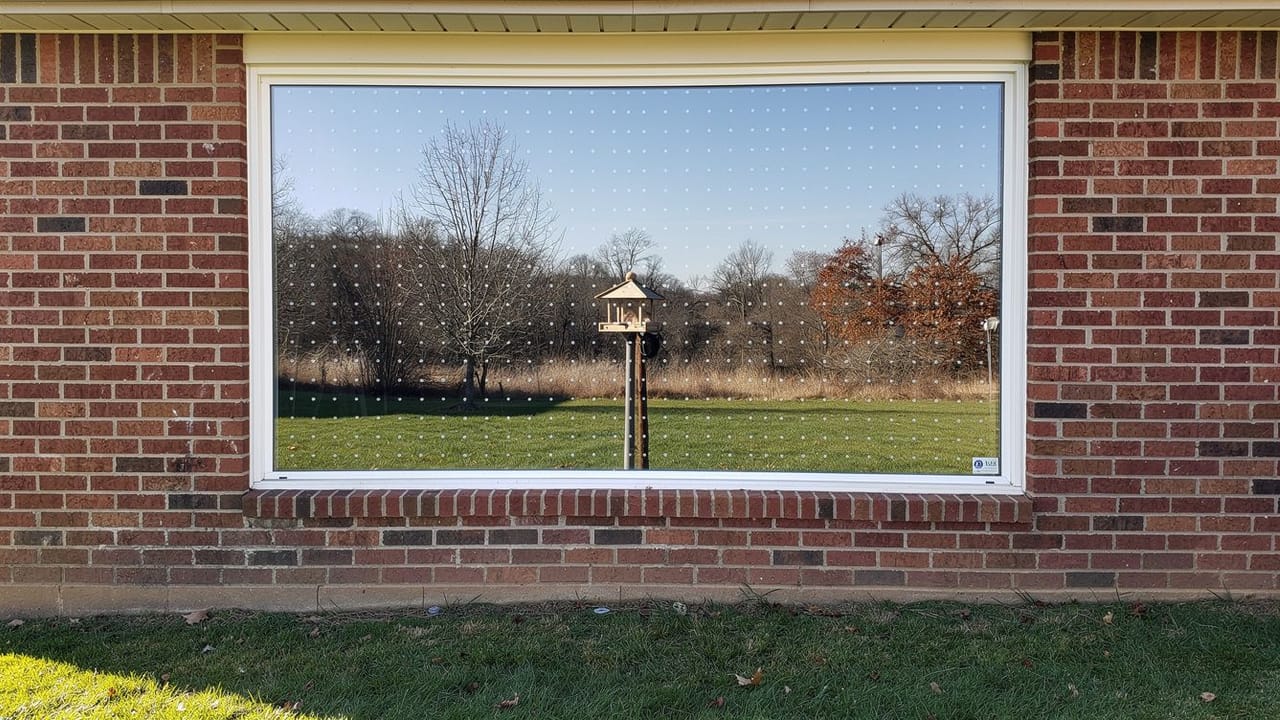
Markings on the outside of the glass, spaced closely, are what stop birds from hitting windows. The Fish and Wildlife Service says marks should be at least a quarter inch across and no more than two inches apart, which protects even hummingbirds. Purdue says the shape does not matter, that hawk silhouettes work no better than dots, and that a single decal is not enough.
Purdue gives the other options too: tape in horizontal stripes no more than two inches apart or vertical stripes no more than four inches apart, netting or a screen hung about two inches out from the glass, or dark cords hung outside at most four inches apart. The Smithsonian adds that soap streaks on the outside have evidence behind them, though they wash off and need redoing each season.
Feeders matter as well. Purdue suggests putting them within a foot and a half of the window, so a startled bird cannot build up speed, or more than 30 feet away.
How do bird markers and window cleaning work together?
Bird markers go on the same outside surface we clean, so the clean comes first and the markers are worked around after. Adhesive dots and tape are meant for clean, dry glass, so if you are adding markers, have the windows cleaned first and put them up once the panes have dried.
After that, tell us which panes carry markers. On those we hand-wash with a soft applicator and squeegee between the rows, and we never run a scraper over them. If you use soap streaks on a few windows during migration, we skip those panes until you want them cleared. Screens left on all year also break up reflections, and our screen and track service keeps them clean enough to see through.
Our residential window cleaning covers every pane inside and out, and our post on cleaning screens without stretching the mesh explains how screens are handled. If birds keep finding one window at your house in Franklin or nearby, tell us which one when you book.
Sources
- U.S. Fish and Wildlife Service, Threats to Birds: Collisions (Buildings and Glass) — More than one billion collisions a year; most fatal at homes and buildings under four stories; markings at least 1/4 inch, no more than 2 inches apart; peaks in migration.
- Purdue Extension, FNR-562-W: Birds and Residential Window Strikes, Tips for Prevention — Reflection, see-through and territorial strikes; about half fatal; shape of marker does not matter; tape, netting, screens and cords; feeder distances; stunned birds.
- Smithsonian Migratory Bird Center, How to Make Your Windows Safer for Birds — Reflections look like a flight path; markings within two inches; soap streaks; screens.
FAQ
Why Birds Hit Windows and What Stops Them — questions
Do hawk silhouette decals keep birds off windows?
Not by themselves. Purdue Extension says the shape of a marker does not matter, so a hawk silhouette works no better than any other shape, and a single decal leaves most of the glass reflecting sky. Markers have to cover the pane in a close pattern, which the Fish and Wildlife Service puts at no more than two inches apart.
Do bird decals go on the inside or outside of the glass?
On the outside. The U.S. Fish and Wildlife Service and Purdue Extension both call for markings on the exterior surface of the glass. The Service says each mark should be at least a quarter inch across and no more than two inches from the next, a spacing that protects even hummingbirds.
Where should a bird feeder go so birds do not hit the window?
Very close or far away. Purdue Extension suggests placing feeders and birdbaths within a foot and a half of the glass, so a startled bird cannot gain enough speed to be badly hurt, or more than 30 feet away, where it is unlikely to reach the window at all.
What should you do with a bird stunned by a window?
Watch it from a distance and keep cats away. Purdue Extension says a stunned bird may recover on its own within a few minutes, and that federal migratory bird law makes it illegal to keep one without a permit. If it seems badly hurt, call a licensed wildlife rehabilitator.