
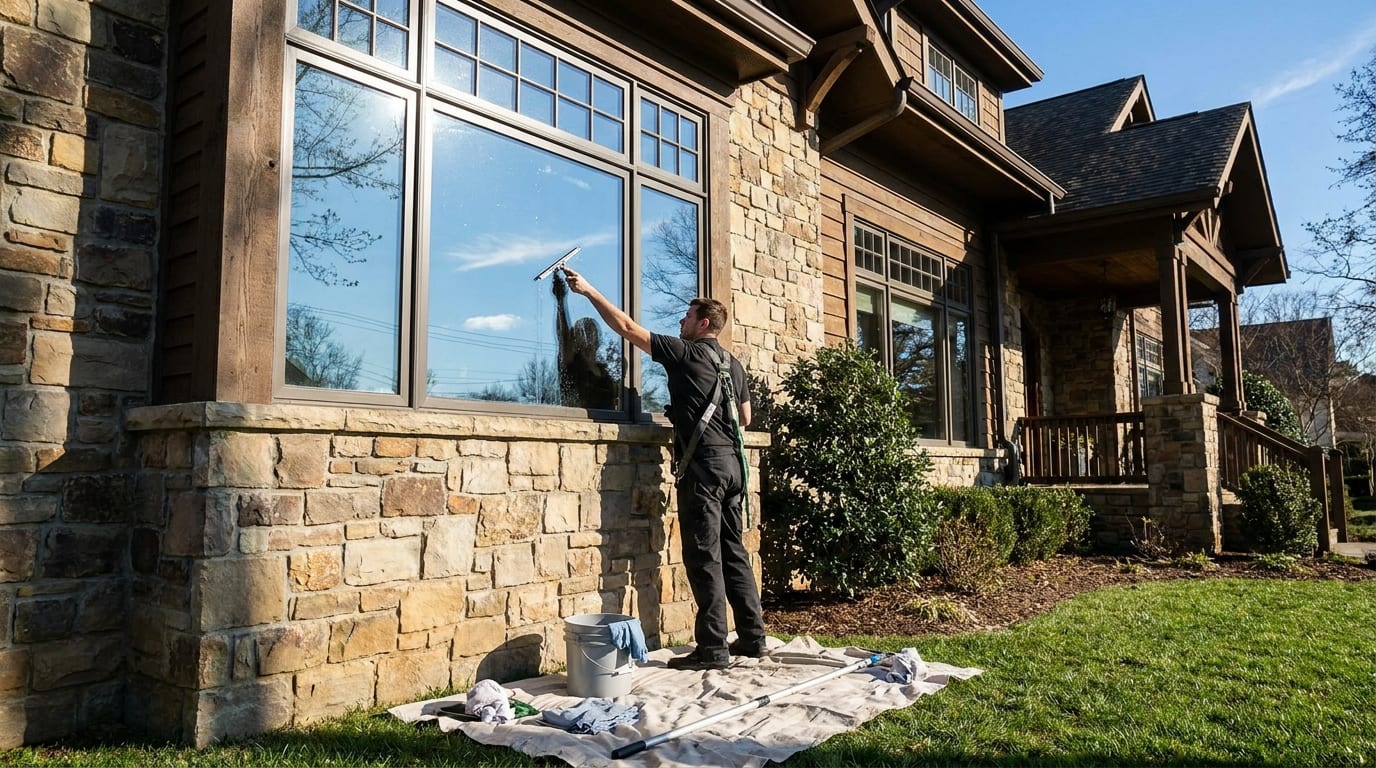
· by Michael Blair, Nashville's Window Cleaning
Twice a year is the generic recommendation. Middle Tennessee has a heavy spring pollen load and enough humidity for organic growth on shaded elevations, both of which push the interval shorter.
How often should windows be cleaned in Nashville?
Twice a year covers most houses — late spring after the pollen drop and autumn after leaf fall. Three times suits houses under heavy tree cover or on a dusty road.
Interior glass generally needs less than exterior, except in kitchens.
Should you clean windows during pollen season?
Cleaning during the heaviest pollen weeks is wasted effort. Waiting until the drop has finished, usually late spring here, means the result lasts.
Autumn is the second natural point, clearing summer growth and organic film before winter.
- Late spring, after the pollen drop finishes
- Autumn, after leaf fall
- Three times under heavy tree cover
- Screens washed at the same time, or they undo it
- Sprinkler overspray is worth redirecting
Screens matter
Dirty screens transfer onto clean glass at the first rain. Washing them at the same time is what makes a clean last, and they are frequently skipped.
They also block a surprising amount of light when clogged with pollen.
Sprinkler overspray
Irrigation hitting glass leaves mineral spotting that ordinary washing will not remove. Redirecting the head is the fix, and it is cheaper than descaling twice a year.
It is one of the most common avoidable causes of permanently marked glass in Nashville.
FAQ
How Often to Clean Windows in Nashville — questions
When is the best time to clean windows in Nashville?
Late spring, once the heaviest pollen drop has finished — cleaning during it is wasted. Autumn after leaf fall is the second natural point. Working on overcast days or on the shaded side of the house gives a better result than a bright afternoon.
Should screens be cleaned too?
Yes, at the same time. Dirty screens transfer onto clean glass with the first rain, which is why a clean sometimes seems not to last. They also block noticeably more light than people realize when clogged with pollen and dust.
What causes spots that will not wash off?
Almost always sprinkler overspray leaving mineral deposit, which is bonded to the glass rather than sitting on it and needs an acid descaler. Left long enough it etches permanently. Redirecting the irrigation head is the actual fix.
When does pollen season end in Tennessee?
In Middle Tennessee the heaviest drop is usually over by late spring, after an April that leaves glass and roofs coated yellow. We schedule the spring window clean for that point on purpose, because glass washed during the peak weeks is soon coated again, and screens clogged with pollen keep shedding it onto the panes.