
· by Michael Blair, Nashville's Window Cleaning
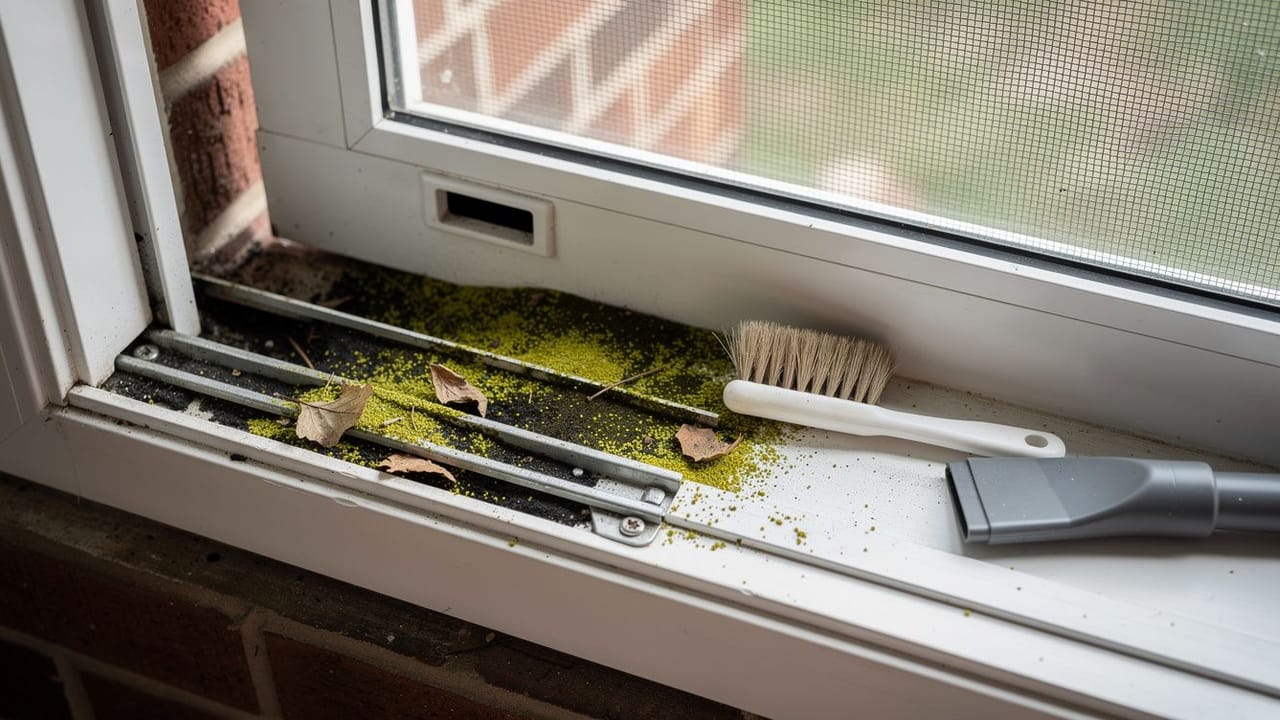
Open a sliding window in late spring around Nashville and the bottom track usually tells you what the season has been: a gray-green line of pollen and dust, some grit, a dead insect or two, and after a rain, a layer of mud in the corners. Double-hung windows collect the same thing along the sill. Most people clean it because it looks bad. The better reason is that the track is part of how the window gets rid of water, and a track packed with dirt can stop doing that. This is how our crews clean tracks, how to find and test the weep holes, and what to do when one has been sealed over. The service itself, washed screens and vacuumed tracks, is on our screens and tracks page.
Why does a dirty window track matter beyond how it looks?
A dirty track matters because it sits in the path water takes out of the window. Many windows have weep holes, small openings that let water drain from the frame to the outside, and the U.S. Department of Energy’s Building America guide from Pacific Northwest National Laboratory on cleaning window weep holes explains that they protect the walls of the house from water damage. Rain that blows past the sash, or condensation that runs down the inside of the glass, ends up in the track and is supposed to leave through those holes.
When the holes are clogged, that water has nowhere to go. The same PNNL guide warns that trapped water can collect in the frame and eventually damage the framing, sheathing, insulation and other materials around it. That damage happens out of sight, inside the wall, which is why we treat the track as part of the window and not just a place dust collects.
There is a plain mechanical reason too. Grit in the track of a sliding window or door is what the rollers ride on, so the sash drags and the dirt grinds at the track and the wheels. Window makers say to keep it out: Marvin’s cleaning and care guidance tells owners to clean sand, dirt and dust from hinges, sills and tracks.
How do our crews clean a window track?
We clean a track dry before it ever gets wet, because water turns pollen and fine clay dust into a paste that sets in the corners. The order is the same on sliders and double-hungs, and it runs like this.
The step most people skip is vacuuming before brushing. Scrubbing a dry track full of grit just moves it toward the low spots, and the low spots are where the weep holes are. A track that looks bad after years without a cleaning takes more passes of brush and vacuum, not stronger chemicals. Where we clean a house’s glass inside and out, the tracks are part of the visit, which is set out on our residential window cleaning page.
- Open the sash fully, or lift it out where the window is designed to tilt or remove, so the whole track is exposed.
- Vacuum the loose dirt with a crevice tool, working the corners and the gap under the weather stripping.
- Loosen the packed dirt with a narrow, stiff brush and vacuum again. A flathead screwdriver wrapped in a cloth reaches the tight corners.
- Wipe the track with a cloth dampened in water and a little mild soap, then a clean damp cloth, and dry it.
- Look along the bottom of the outside frame for the weep holes and check them before closing up.
How can you tell if the weep holes are draining?
You can tell by putting water in and watching for it to come out. The PNNL guide gives two simple tests: mist water onto the outside of the glass, or pour a glass of water into the track or the interior weep hole. Some of the water should come out of the weep hole on the outside. If none does, or if you can see debris in the opening, it needs cleaning.
Finding the holes is the first job. On the outside, they are small flat holes or slots at the bottom of the exterior frame. On the inside, the opening may sit under the track itself, and the guide notes that it can be reached by removing the track, or the hole can be cleaned from the outside only.
To clear a blocked hole, PNNL suggests a flathead screwdriver, a crochet hook, a thin brush of the kind used for drains, pipes or straws, a garden hose, and compressed air if you have it. Its main caution is the one we follow on every window: try not to push the debris further into the hole. We draw the dirt out toward the outside rather than poking it inward, then repeat the water test to confirm it runs.
What if someone caulked over the weep holes?
If the holes have been caulked shut, the caulk has to come off, because a sealed weep hole is the same as a clogged one. PNNL describes holes being accidentally caulked and suggests checking whether caulk covers them. It happens most often when the outside of a house is painted or resealed and the person with the caulk gun runs a bead along the whole bottom of the frame, slots included.
The guide’s fix is to take the caulk off the hole with a putty knife, a utility knife or a screwdriver, cutting only what covers the opening and leaving the rest of the seal between the frame and the wall alone. Then the water test again. If you spot a caulked-over weep hole on a ladder-height window, or you would rather have our screens and tracks service done along with the glass, ask for a free estimate and tell us which windows. Spring pollen season is when we see the most packed tracks, so our notes on how often to clean windows in Nashville are a good guide for when to have them done.
Sources
- Pacific Northwest National Laboratory, Building America Solution Center (U.S. Department of Energy): Clean Window Weep Holes — What weep holes do, the damage trapped water causes, where to find them, the water test, the tools, and removing caulk from a sealed hole.
- Marvin: Window and Door Maintenance, Cleaning and Care — Manufacturer guidance to clean sand, dirt and dust from window and door hinges, sills and tracks.
FAQ
Cleaning Window Tracks and Clearing Weep Holes — questions
How do you clean sliding window tracks?
Open the sash fully and vacuum the loose grit first, with a crevice tool along the corners. Then loosen packed dirt with a narrow stiff brush and vacuum again. Finish with a cloth dampened in water and a little mild soap, wipe with clean water, dry it, and check that the weep holes at the bottom drain.
What are the little holes at the bottom of a window frame for?
They are weep holes, small openings that let water drain out of the window frame. Rain that gets past the sash and condensation that runs into the track is meant to leave through them. If they clog, water can sit in the frame and, over time, damage the framing, sheathing and insulation around the window.
Why are my window weep holes not draining?
Usually they are packed with dirt, pollen, insects or leaf bits washed into the track, or someone caulked over them while sealing the outside of the frame. Pour a glass of water into the track and watch the outside. If none comes out, clear the hole gently from outside without pushing debris deeper.
Should I cover or caulk window weep holes?
No. A weep hole is there to let water out, and caulking it shut traps that water inside the frame, where it can damage the wall around the window. If caulk already covers one, cut away only what sits over the opening with a putty knife or utility knife, then test it with water.
How do you clean really dirty window tracks?
Work dry and in passes. Vacuum the loose dirt, brush to break up what is packed in the corners, and vacuum again, repeating until the track is down to a thin film. Only then wipe it with a damp cloth. Wetting a heavily soiled track first turns pollen and dust into a paste.